
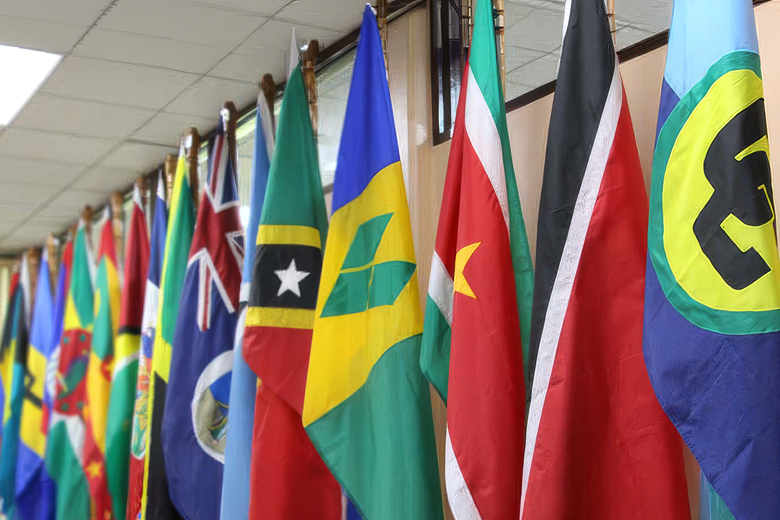
HCC OPEN LETTER
TO CARICOM HEADS OF GOVERNMENT AND STATE
AT THE 50TH REGULAR MEETING OF THE CONFERENCE OF HEADS OF GOVERNMENT
FEBRUARY 24-27, 2026
ST. KITTS AND NEVIS
February 23rd, 2026
Dear Honourable Heads of Government and State of CARICOM,
On the occasion of the Fiftieth Regular Meeting of the Conference of Heads of Government, the Healthy Caribbean Coalition (HCC) – representing civil society organisations, people living with non-communicable diseases (NCDs), and youth across the CARICOM – calls on CARICOM Heads of Government and State to reaffirm and strengthen the nearly twenty-year commitment made to the people of the Caribbean to address NCDs as a central development priority, as articulated in the 2007 Declaration of Port-of-Spain.
We urge CARICOM Heads of Government and State to advance this commitment by:
- Establishing structured, institutionalized and meaningful spaces for civil society to contribute to Heads of Government Meetings and other high-level regional policy dialogues.
- Strengthening accountability mechanisms to track progress on health, and specifically NCDs, by including NCDs as a standing agenda item at Heads of Government Meetings and reviewing the Port of Spain NCD Summit Grid Report
CARICOM leaders have recently shown measurable strides in implementing some NCD-focused commitments, including the implementation of School Nutrition Policies targeting the sale and marketing of ultra-processed products in and around schools, and fiscal measures aimed at reducing NCD risk factors. Promising “double-duty” actions are also emerging, including initiatives such as the Caribbean Disaster Assistance Program (CDAP) and various National Health Fund mechanisms, which together offer co-benefits across climate resilience, social protection, and population health outcomes. However, more urgent, coordinated and accelerated action on NCDs is still required.
NCDs continue to impose a significant and growing economic burden through rising healthcare expenditure, lost productivity, and reduced workforce participation, all of which undermine regional development. These conditions disproportionately affect vulnerable populations, including low-income households, persons with disabilities, older persons, and those living in remote and climate-vulnerable communities, further deepening existing social and economic inequities across the region.
Appropriate policies and action on key agenda items for the Fiftieth Meeting – including food and nutrition security and climate change – are critical to progress in NCD prevention and control.
Climate action is health action. Climate crises are public health crises; as climate-induced disasters intensify across the Caribbean, health must remain at the center of climate strategies – especially given that excess disaster-related mortality is largely driven by NCDs. Persons living with these conditions during a disaster must navigate food and nutrition insecurity, disrupted access to healthcare and essential medications, and weakened social support systems.
Relatedly, food and nutrition security remains paramount to the NCD agenda, as diets high in salt, sugar, and fat are the major driver of NCDs. Decisions made on food and nutrition security must account for the impact on health security.
Recently, NCDs were recognized as a critical developmental issue on the global stage at the 4th UN High-Level Meeting on NCDs and Mental Health on September 25th 2026. While CARICOM leaders highlighted progress made on NCDs and mental health during this meeting, sustaining this momentum requires ongoing dialogue, accountability, and co-created solutions. Meaningful and lasting progress is best achieved when the voices of those most affected – and those called upon to lead, support, and implement change – are actively engaged.
In this context, we urge CARICOM Heads of Government and State to:
- Establish structured and sustained spaces for civil society (including youth and persons living with NCDs and other vulnerabilities) to meaningfully contribute to Heads of Government Meetings and other high-level regional policy dialogues, and
- Include NCDs as a standing agenda item at Heads of Government Meetings, including regular review of the Port of Spain NCD Summit Grid Report – recognizing the ongoing and disproportionate burden of NCDs in the Caribbean, their interconnection with broader economic, social, and developmental issues as highlighted by Caribbean Heads of Government in 2007, and the urgent need for sustained, meaningful, and effective action.
As CARICOM continues to chart its course toward sustainable development, climate resilience, and food and nutrition security, it is fundamental that health, particularly the prevention and control of NCDs – remain central to regional leadership and action. Sustained and effective NCD prevention and control is critical to a thriving, sustainable CARICOM.
Sincerely,

Senator Dr. Kenneth Connell
President, Healthy Caribbean Coalition
HCC Member Organisations including:
 Mrs. Karissa Moss-Saunders
Lead, Healthy Lifestyles Team Bahamas (HaLT)
 Ms. Tanya Ambrose
MPH. Founder & CEO, Scrub Life Cares
 Ms. Charity Dublin
President, Antigua and Barbuda Diabetes Association
 Ms. Greta Yearwood
Chief Executive Officer, Heart and Stroke Foundation of Barbados
 Mrs. Kim Simplis Barrow
President, Belize Cancer Society
 Dr. Alison Bernard
Executive Director, The Breastfeeding and Child Nutrition Foundation
 Dr. Jane Noel
Chair, Grenada National Chronic Non-Communicable Disease Commission
 Mrs. Debbie Chen
Executive Director, Heart Foundation of Jamaica
 Shannique Bowden
Executive Director, Jamaica Youth Advocacy Network
 Mrs. Abi Begho
Programme Director, Lake Health and Wellbeing (St. Kitts and Nevis)
 Dr. Kedhma Dorh
President, St Lucia Diabetes and Hypertension Association
 Dr. Andrew Dhanoo
President, Diabetes Association of Trinidad and Tobago
 Ms. Lisa Feveck R.D.
President, Trinidad and Tobago Association of Nutritionists and Dietitians