
Dianne Kennedy, MS
Every day, before our children enter school, they are targeted. The bright packaging on the canteen snack, the branded cooler in the tuck shop, and a favourite influencer casually drinking a soda while talking to their followers as our children scroll on their phones— these are not accidents. They are deliberate corporate strategies that rely on repetitive exposure which can capture our children’s attention and create brand loyalty. And as large food and beverage corporations rake in profits with their high in salt, sugar and fats products, our children and region pay the price with their health by increasing their risks of diabetes, obesity, and heart-disease.
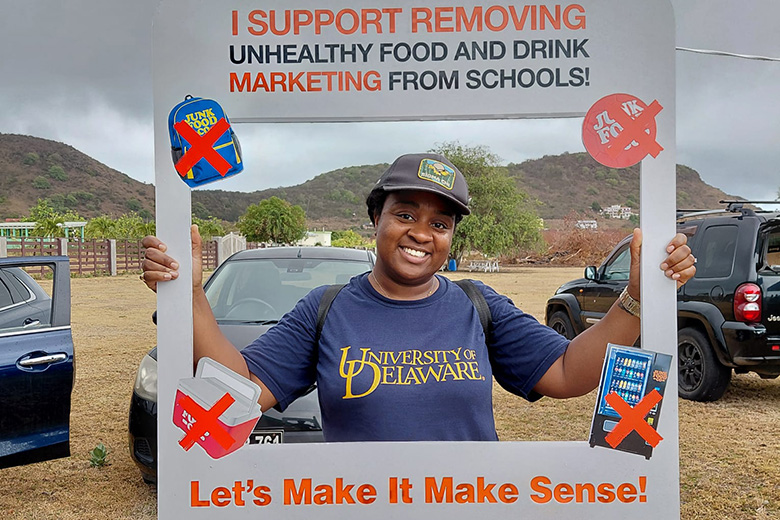
Hope for the Future is a youth-led regional campaign calling for healthier school food environments, and specifically the ban on marketing of Ultra-Processed Products (UPPs) to children. Youths from across the region and civil society campaign—led by Healthy Caribbean Youth (HCY) and the Healthy Caribbean Coalition (HCC)—participated in a radio broadcast on St. Kitts’ Freedom FM calling for a ban on marketing ultra-processed products to children on June 3rd, 2026. Days later, on Friday, June 5th, that momentum moved directly into the community at Independence Square in Basseterre, St. Kitts. The youth advocates, supported by Lake Health and Wellbeing, took the campaign to the streets. The resonance on the ground was unmistakable; local citizens and parents spoke out with deep, collective concern about the sheer volume of junk food our children are consuming daily and echoed the need to hold these companies accountable for targeting our children. Hearing these young advocates and community voices united makes one thing clear: our children feel the weight of this toxic food environment, and they need us to protect them.
As a mother and a child nutrition program specialist, I feel the community’s desire to have a policy to ban the marketing and the sale of ultra-processed products in and around schools. Research directly links ultra-processed products to the obesity and type 2 diabetes epidemic plaguing the Caribbean health systems. But we must face a hard truth: we must shift this campaign from awareness to action.
Without strong policy and legislative systems, corporate interests easily find workarounds to market to our children. The lack of consistent monitoring, training on staying compliant, tools and resources built specifically for our region causes a policy to become a visible symbol — but remains completely ineffective, as our children’s health continues to decline.
Successful policies require three pillars working in tandem: clear regulatory framework, consistent monitoring, and meaningful accountability. We do not have to look far for inspiration. Since launching its National School Nutrition Policy in 2023, Barbados has led the way by conducting real compliance checks and extending monitoring right up to the school gates.
We must scale this proactive approach regionally. True success means building a collaborative Caribbean infrastructure where member states share data tools, continuously train school administrators, and actively embed youth perspectives into monitoring.
To our regional policymakers: the call from our youth and communities is loud, clear, and urges an immediate response. The greatest gift you can give is the long-term commitment to create policies that incorporate the training, accountability, and monitoring that makes them live. Let us act with courage and build school environments that protect our children’s health, every single day.
Dianne Kennedy, MS, is a Child Nutrition Program and Operations specialist in St. Kitts and Nevis. With over 13 years of expertise in child nutrition administration and policy oversight, she collaborates with regional partners to build sustainable, legislated school food frameworks.