
Over the past 30 years, childhood obesity in the Caribbean has more than doubled, making it the hardest-hit region in the Americas. In 2022, 8.6% of children under five were overweight. Among those aged 5–9, rates ranged from 23% in Jamaica and 26.1% in Saint Lucia to 39.5% in The Bahamas. These are not distant figures; they are our children.
On small islands, limited resources and fragile health systems magnify the impact. Obesity is no longer a future threat. It is a present crisis affecting health, learning, and productivity.
World Obesity Day 2026 underscores that this rise is not accidental but systemic. Policies shaped by industry and trade, influence the environments where children grow. When profit outweighs public health, the vulnerable suffer. Accountability and decisive action are now essential.
From Sugar Colonies to Sugar-Saturated Lives
We all know the Caribbean’s history with sugar, and this legacy persists in ultra-processed products and drinks flooding markets and schools. Beverage imports have increased by over 150% in the past decade, fueled by aggressive marketing targeting children and low-income communities.
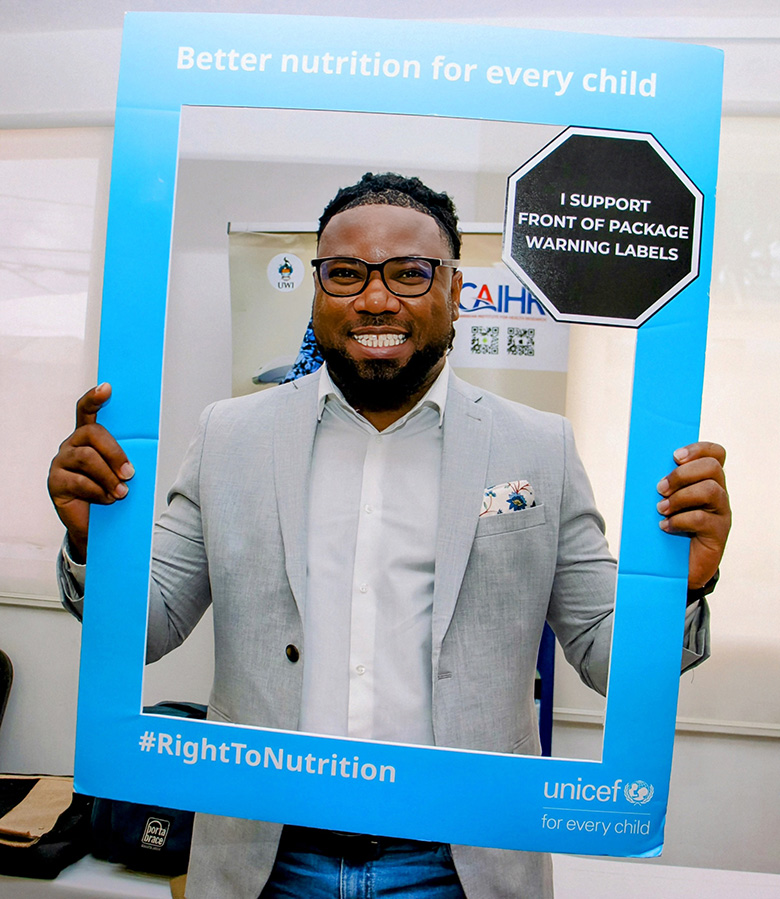
Globally, childhood obesity rose from 4% in 1975 to nearly 20% in 2022, with the fastest increase in low- and middle-income countries. The Caribbean matches obesity rates of wealthier nations but lacks equivalent healthcare capacity. Weak regulation and delayed policy implementation, including the National School Nutrition Policy and Front-of-Pack Warning Labels, leave children exposed.
Obesity is a Policy Outcome
Obesity is often framed as personal failure, but children do not design food systems, regulate advertising, or set prices. Trade, zoning, marketing, and education policies determine what is affordable and accessible.
Across the Caribbean, ultra-processed products are often cheaper than fresh produce. Sugary drinks are more available in schools than safe drinking water. Physical education is inconsistent. Many communities lack safe spaces for play and active transport. Blaming children ignores these realities. Obesity reflects misaligned policy, not moral weakness.
The NCD Pipeline Begins Early
Childhood obesity rarely resolves without intervention and significantly increases the risk of non-communicable diseases (NCDs). Conditions once confined to adults, such as hypertension and diabetes, are now common in children.
The Caribbean carries one of the world’s highest NCD burdens. Clinics are overstretched, and dialysis centres operate at capacity. Early-onset illness costs the region an estimated US$500 million annually, resources that could be used to support education and infrastructure.
Globally, four billion people may live with overweight or obesity by 2035. For small island developing states, this trend is unsustainable, with healthcare spending projected to exceed 15% of GDP.
Compounding the crisis is a stark paradox: food insecurity and obesity often coexist. Families may meet calorie needs but lack proper nutrition, as cheap, energy-dense foods replace balanced diets. Stigma further deepens harm by discouraging families from seeking care.
Fast-food outlets often outnumber fresh produce vendors near schools. Affordability shapes choices more than knowledge. Young people are not abstract beneficiaries of reform. We are the data in reports and the generation inheriting strained health systems.
Calls to “try harder” are insufficient. Structural drivers must be addressed to make healthy choices the default, not the exception.
What Must Change—Now
Governments must act decisively: implement strong taxes on sweetened beverages, enforce clear front-of-package warning labels, restrict marketing of unhealthy products to children, and invest in affordable local agriculture. Barbados’ 10% sugar-sweetened beverage tax reduced consumption, while Jamaica’s proposed special consumption tax could generate J$10.1 billion, showing fiscal policy can protect both public health and revenue.
Schools should guarantee quality physical education, nutritious meals, and safe drinking water. Primary care must prioritise early, family-based, stigma-free prevention strategies. Urban planning should promote walkable, green communities, especially in vulnerable areas. Crucially, youth must help shape solutions through School Health Audits and Youth Policy Councils because inclusion drives impact.
World Obesity Day is a call to courage. Leaders must choose evidence over expedience. Health professionals must centre science and dignity. Societies must protect children as fiercely as profits.
There are eight billion reasons to act. Obesity at this scale weakens economies, deepens inequality, and shortens lives. In the Caribbean, where resources are finite, inaction is the most expensive choice of all.
History will not ask what we knew. It will ask what we did.
Offniel Lamont is a Sports Medicine, Exercise and Health Specialist, Physiotherapist and Public Health Youth Advocate with Healthy Caribbean Youth.